PVC Pipe


PVC-M Pipes for Water Supply
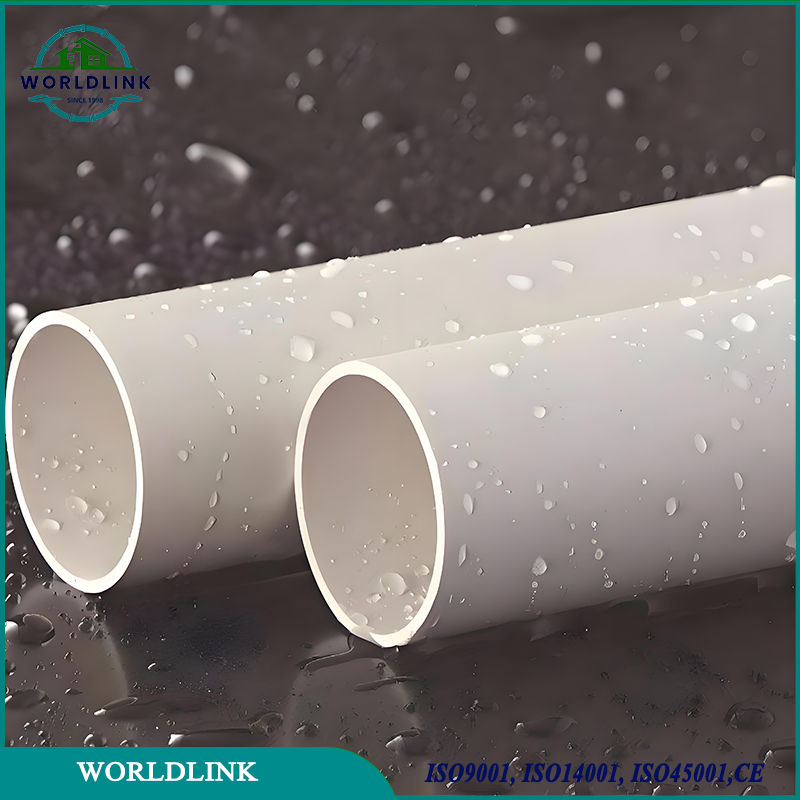
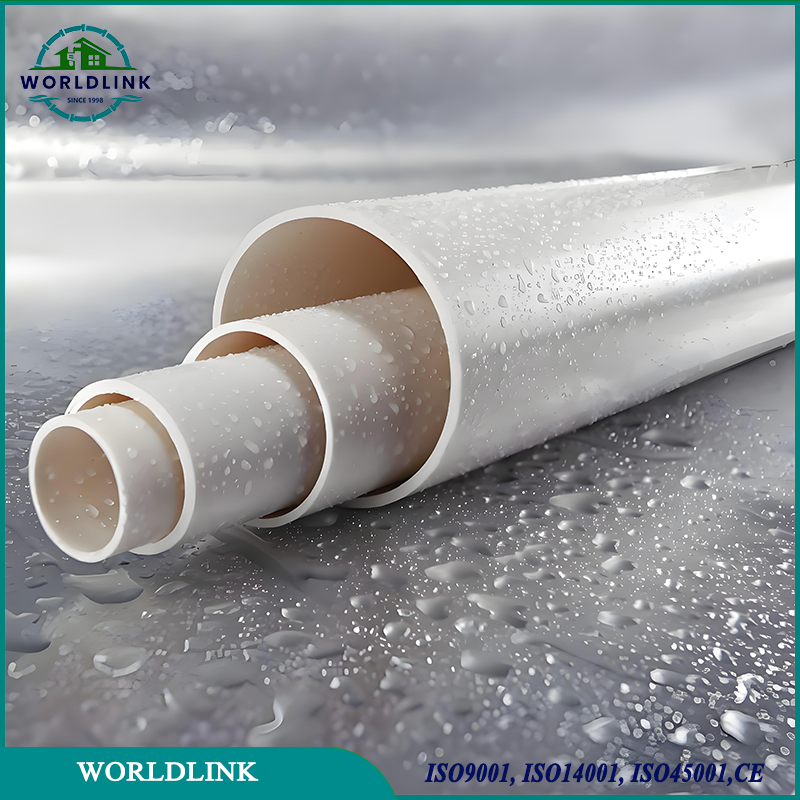
The PVC-M water supply pipe stands for Modified Polyvinyl Chloride pipe, a toughened version of standard PVC designed for improved performance, especially in water supply systems.
- Caliber: DN20-DN800
- Pressure Rating: PN4-PN20, SCH40, SCH80
- Implementation Standards: GB/T 32018.1 - 2015, AS/NZS 4765
- Color: Commonly gray and white, can be customized
- Packaging: 4 meters, can be customized
- Certificate of Origin: China
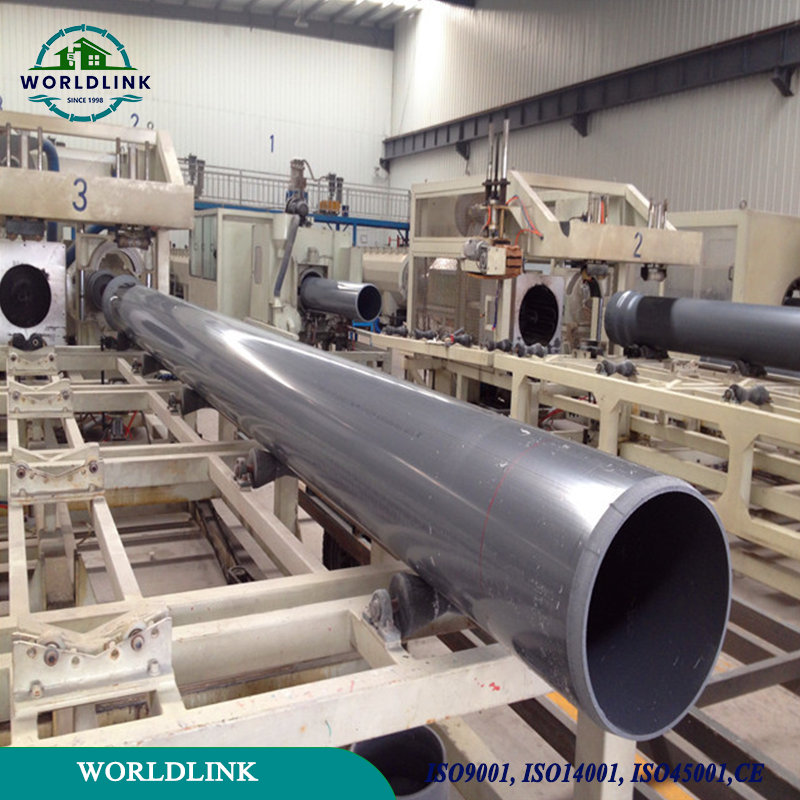
- Product Inspection: Raw materials, production process, delivery or cooperate with a third-party quality inspection
- Minimum Order Quantity: Mixed specifications, 1 20-foot small container
Detailed Description of PVC-M Pipes for Water Supply:
Based on ordinary PVC pipes, the PVC-M water supply pipe is modified to make the molecular structure of the pipe more regular and compact, thus improving the mechanical properties of the pipe. Connection methods: Commonly used methods include adhesive bonding, threaded connection, flange connection, and rubber ring connection, etc. Adhesive connection makes the connection parts of the pipe and fittings reach a molten state through suitable adhesive, and then solidifies to form a whole, with good sealing performance. Rubber ring connection is to install a rubber ring at the socket of the pipe, insert the fitting into the socket, and use the elasticity of the rubber ring to achieve a sealed connection. It is simple to operate and suitable for the connection of large-caliber pipes.
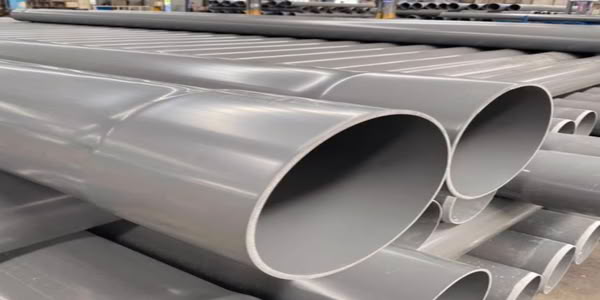

Material Characteristics and Advantages of Polyvinyl Chloride (PVC-M) Water Supply Pipe
Good Corrosion Resistance: PVC-M material has excellent chemical corrosion resistance and can resist the erosion of various chemical substances such as acids, alkalis, and salts. It is suitable for water supply systems with different water qualities.
High Compressive Strength: It has high compressive strength and tensile strength, and can withstand relatively large water pressure. It is not easy to crack or deform, and can meet different water supply pressure requirements. It can work stably even in the high-pressure environment of urban water supply pipe networks.
Strong Abrasion Resistance: With relatively high surface hardness and good abrasion resistance, during long-term use, it is not easily worn by solid particles and other substances in the water.
Good Sanitary Performance: The materials used in PVC-M water supply pipes meet the sanitary standards. They are non-toxic and odorless, and will not cause pollution to drinking water, ensuring the safety and sanitation of water supply. They can be widely used in the field of drinking water transportation to protect people's physical health.
Superior Hydraulic Performance: The inner wall of the pipe is smooth, with a small roughness coefficient and low water flow resistance. It can effectively reduce the energy loss of water flow in the pipe, improve the water supply efficiency, reduce the energy consumption of water supply equipment such as water pumps, and thus reduce the water supply cost.
Good Flexibility: Compared with traditional rigid PVC pipes, PVC-M water supply pipes have better flexibility and can adapt to certain changes in geological conditions such as ground settlement and earthquakes. They are not easy to crack due to minor deformations of the pipeline foundation, improving the stability and reliability of the pipeline system.
Convenient Construction: It is relatively light in weight, making it easy to handle and install. At the same time, the pipeline connection method is simple, and various connection methods such as hot melt connection, electrofusion connection or rubber ring connection can be adopted. The connection is firm, the construction efficiency is high, which can shorten the construction period and reduce the construction cost.
Long Service Life: Under normal use conditions, the service life of PVC-M water supply pipes can reach more than 50 years, with high cost performance. It reduces the frequency of pipeline replacement and maintenance, and lowers the long-term operation cost.
Environmentally Friendly and Energy-saving: PVC-M material can be recycled and reused, which meets the environmental protection requirements. During the production and use process, compared with some metal pipes, it has lower energy consumption, which helps to save energy and reduce the impact on the environment.


Pipeline Detection Items:

|

|

|
|
Determination of Melt Flow Rate |
Simple Supported Beam Impact Test |
Tensile Yield Stress Test |

|

|

|
|
Hydrostatic Test |
Vicat Softening Test |
High Temperature Stress Relief Test |
| Nominal Outside Diameterdn | Pipe Series S and Nominal Pressure PN | Rubber Ring Joints(RRJ) Minimum Socket Depth mmin | Solvent Cement Joints(SCJ) Minimum Socket Depth mmin | ||||
| S20 | S16 | S12.5 | S10 | S8 | |||
| SDR41 | SDR33 | SDR26 | SDR21 | SDR17 | |||
| PN8 | PN10 | PN12.5 | PN16 | PN20 | |||
| Nominal Wall Thickness en | |||||||
| 63 | 2.0 | 2.0 | 2.5 | 3.0 | 3.8 | 64.0 | 37.5 |
| 75 | 2.0 | 2.3 | 2.9 | 3.6 | 4.5 | 67.0 | 43.5 |
| 90 | 2.2 | 2.8 | 3.5 | 4.3 | 5.4 | 70.0 | 51.0 |
| 110 | 2.7 | 3.4 | 4.2 | 5.3 | 6.6 | 75.0 | 61.0 |
| 125 | 3.1 | 3.9 | 4.8 | 6.0 | 7.4 | 78.0 | 68.5 |
| 140 | 3.5 | 4.3 | 5.4 | 6.7 | 8.3 | 81.0 | 76.0 |
| 160 | 4.0 | 4.9 | 6.2 | 7.7 | 9.5 | 86.0 | 86.0 |
| 180 | 4.4 | 5.5 | 6.9 | 8.6 | 10.7 | 90.0 | 96.0 |
| 200 | 4.9 | 6.2 | 7.7 | 9.6 | 11.9 | 94.0 | 106.0 |
| 225 | 5.5 | 6.9 | 8.6 | 10.8 | 13.4 | 100.0 | 118.5 |
| 250 | 6.2 | 7.7 | 9.6 | 11.9 | 14.8 | 105.0 | - |
| 280 | 6.9 | 8.6 | 10.7 | 13.4 | 16.6 | 112.0 | - |
| 315 | 7.7 | 9.7 | 12.1 | 15.0 | 18.7 | 118.0 | - |
| 355 | 8.7 | 10.9 | 13.6 | 16.9 | 21.1 | 124.0 | - |
| 400 | 9.8 | 12.3 | 15.3 | 19.1 | 23.7 | 130.0 | - |
| 450 | 11.0 | 13.8 | 17.2 | 21.5 | 26.7 | 138.0 | - |
| 500 | 12.3 | 15.3 | 19.1 | 23.9 | 29.7 | 145.0 | - |
| 560 | 13.7 | 17.2 | 21.4 | 26.7 | - | 154.0 | - |
| 630 | 15.4 | 19.3 | 24.1 | 30.0 | - | 165.0 | - |
| 710 | 17.4 | 21.8 | 27.2 | - | - | 177.0 | - |
| 800 | 19.6 | 24.5 | 30.6 | - | - | 190.0 | - |
| 1: The minimum required strength of the pipe is not less than 24.5MPa, the nominal wall thickness (en) is determined according to the design stress (as) 16MPa, and the minimum wall thickness of the pipe is 2.0mm. 2:“-” Indicates not recommended. 3:When the length of the pipe is longer than 12 m, the rubber ring joints socket depth mmin needs to be designed separately. | |||||||
Polyvinyl chloride (PVC-M) water supply pipes are mainly applied in the following scenarios:
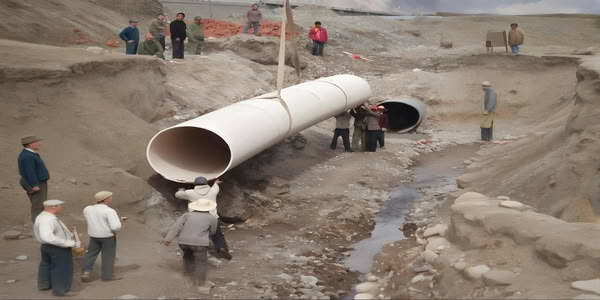
Building Water Supply Systems: In the urban tap water distribution pipe network, PVC-M water supply pipes can undertake the task of supplying water over long distances and with large flow rates. With their good toughness, impact resistance, and corrosion resistance, they can adapt to complex geological conditions.
Commercial and Public Buildings: In the water supply systems of buildings such as office buildings, shopping malls, schools, and hospitals, PVC-M water supply pipes can meet the water demand of different floors and different functional areas.
Industrial Enterprises: In some industrial productions where the requirements for water quality are not particularly high, such as the textile, printing and dyeing, and mechanical processing industries, PVC-M water supply pipes can be used as pipelines for transporting industrial water.
Sprinkler and Drip Irrigation Systems: In agricultural irrigation, PVC-M water supply pipes are often used to connect sprinkler irrigation equipment and drip irrigation equipment.