PVC Pipe
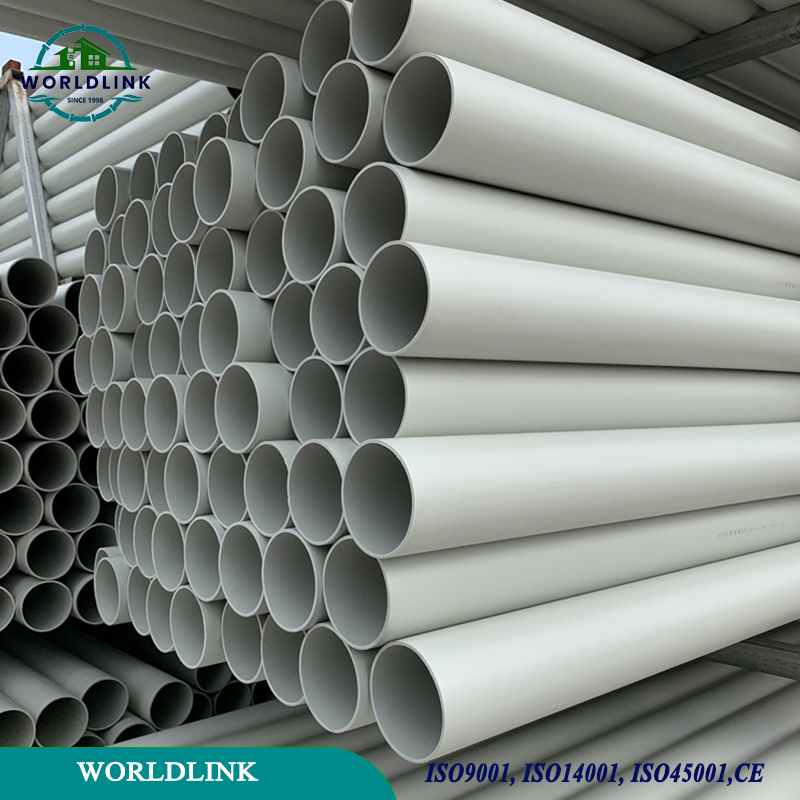
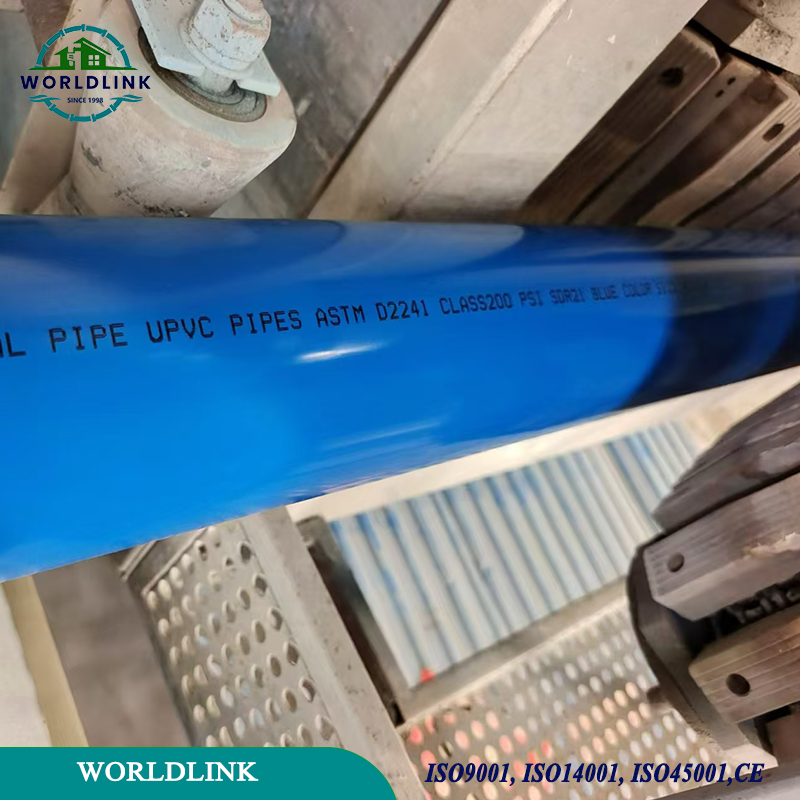
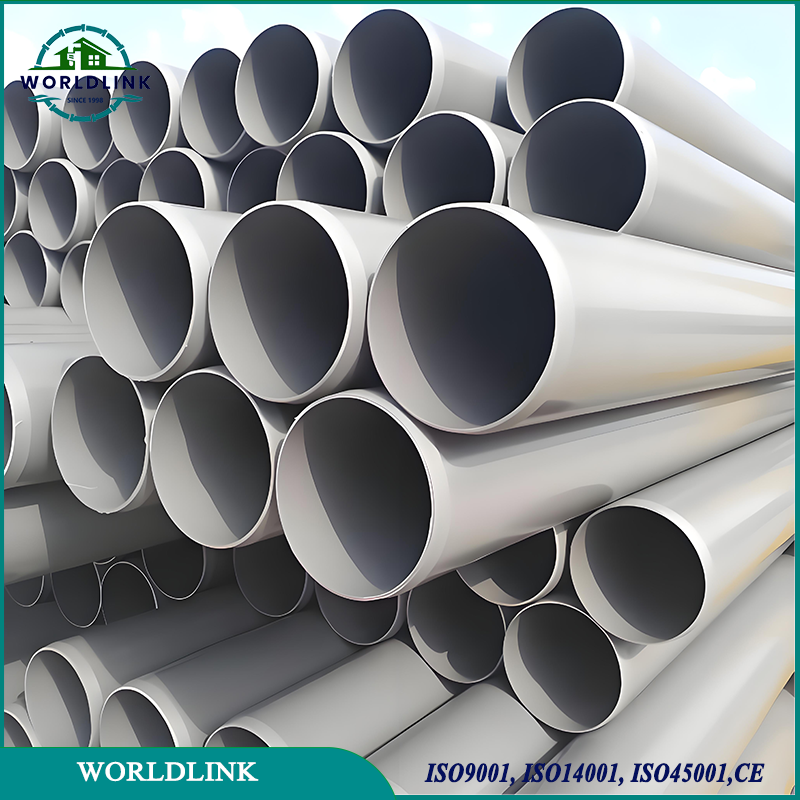


ASTM SCH80/SCH40 PVC pipes
The American standard PVC pipe is meticulously manufactured from special high-molecular polyvinyl chloride. Having undergone numerous stringent pressure tests and a variety of physical property inspections, it is an ideal piping system with superior quality.
- Diameter: 1/2" - 36"
- Pressure Rating: SDR64-SDR13.5, SCH40, SCH80
- Implementation Standards: ASTM-D1785; ASTM-F441; SDR Series...
- Color: Commonly gray and white, customizable
- Packaging: 4m or 6m, customizable
- Certificate of Origin: China
- Product Inspection: Inspection of raw materials, production process, delivery, or cooperation with a third-party quality inspection
- Minimum Order Quantity: Mixed specifications, 1 20-foot small container
Detailed Description of American Standard PVC Pipe Made of Polyvinyl Chloride (PVC):
The American standard PVC
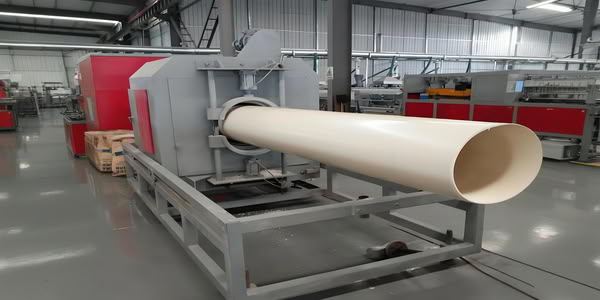
pipe made of polyvinyl chloride (PVC) is usually produced by the extrusion molding process. Firstly, the precisely
proportioned raw materials are fed into a high-speed mixer for thorough mixing, so that various additives are evenly
dispersed in the polyvinyl chloride resin. Then, the well-mixed raw materials are fed into an extruder. Under the
action of high temperature and high pressure in the extruder, the raw materials are plasticized and extruded into a
tubular shape.
After extrusion, the pipe undergoes processes such as cooling and shaping, haul-off, and cutting,
and finally, an American standard PVC pipe that meets the dimensional specification requirements is formed. During
the production process, various process parameters such as temperature, pressure, and extrusion speed need to be
strictly controlled to ensure the stable quality and excellent performance of the pipe. The connection methods
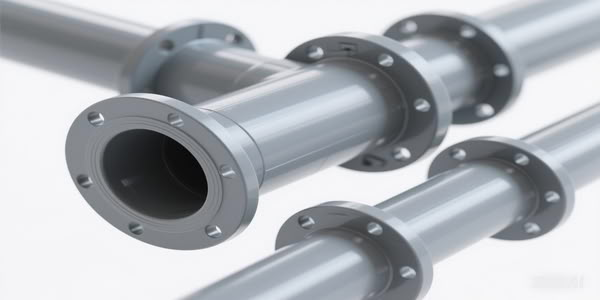
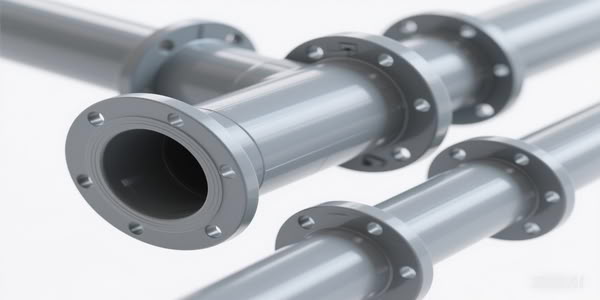
include: solvent bonding, socket connection with rubber ring sealing, and flange connection.

|
|

|
Characteristics and Advantages of American Standard PVC Pipe Made of Polyvinyl Chloride (PVC):
1. Smooth Inner Wall: The inner wall of the pipe is as smooth as a mirror, effectively preventing problems such as rusting and scaling. It ensures smooth fluid transportation without obstruction, reduces transportation energy consumption, and prolongs the service life of the pipeline.
2. Simple Construction: Using the cold adhesive solvent welding method, the operation is convenient. It does not require complex tools or professional skills, greatly shortens the construction period, reduces the construction cost, and the joint has good sealing performance, making it less likely to leak.
3. Strong Corrosion Resistance: It has excellent corrosion resistance and chemical resistance, and can resist the erosion of various chemical substances such as acids and alkalis. It is suitable for harsh environments such as chemical engineering, electroplating, and wastewater treatment, ensuring the long-term stable operation of the pipeline.
4. High Pressure Resistance: With a thick pipe wall, it has excellent pressure-bearing capacity and can withstand 3 to 4 times the rated pressure. It also has strong toughness and is not easy to crack or deform in a high-pressure environment, ensuring the safety of transportation.
5. Strict Quality Standards: The materials of straight pipes and fittings strictly comply with the American national quality standards (ASTM), and some products meet the standards for potable drinking water (NSF 14 or NSF 61), ensuring the safety of water quality and can be safely used in relevant fields such as drinking water transportation.
6. UV Resistance: Even if it is laid outdoors for a long time, under the irradiation of ultraviolet rays, its performance remains stable, and the service life can reach more than 30 years, reducing the cost of replacement and maintenance, and is suitable for various outdoor projects.
7. Low Thermal Conductivity Coefficient: The thermal conductivity coefficient is only 1/300 of that of SGP, which can effectively reduce heat transfer. When used in the HVAC system, it can significantly improve the cooling power, reduce the cost of thermal insulation, and achieve energy conservation and consumption reduction.
8. High Chemical Stability: It has stable chemical properties and will not cause secondary pollution to the transported medium. It meets environmental protection and hygiene requirements and can be widely used in industries with strict hygiene requirements such as food and medicine.


Pipeline Detection Items:

|

|

|
|
Determination of Melt Flow Rate |
Simple Supported Beam Impact Test |
Tensile Yield Stress Test |

|

|

|
|
Hydrostatic Test |
Vicat Softening Test |
High Temperature Stress Relief Test |
| ASTM F 441 Specification for Chlorinated Poly (Vinyl Chloride) (CPVC) Plastic Pipe, Schedules 40 and 80 | |||||||||
| Nom. Pipe Size (in.) | O.D. (in.) | Schedule 40 Dimensions(in) | Schedule 80 Dimensions(in) | ||||||
| Average I.D. | Min. Wall | Nom. Wt./Ft. | Max. W.P | Average I.D. | Min. Wall | Nom. Wt./Ft. | Max. W.P | ||
| 1/4 | 0.540 | 0.344 | 0.088 | 0.096 | 780 | 0.282 | 0.119 | 0.117 | 1130 |
| 3/8 | 0.675 | 0.473 | 0.091 | 0.128 | 620 | 0.403 | 0.126 | 0.162 | 920 |
| 1/2 | 0.840 | 0.602 | 0.109 | 0.190 | 600 | 0.526 | 0.147 | 0.238 | 850 |
| 3/4 | 1.050 | 0.804 | 0.113 | 0.253 | 480 | 0.722 | 0.154 | 0.322 | 690 |
| 1 | 1.315 | 1.029 | 0.133 | 0.371 | 450 | 0.936 | 0.179 | 0.473 | 630 |
| 1-1/4 | 1.660 | 1.360 | 0.140 | 0.502 | 370 | 1.255 | 0.191 | 0.654 | 520 |
| 1-1/2 | 1.900 | 1.590 | 0.145 | 0.599 | 330 | 1.476 | 0.200 | 0.793 | 470 |
| 2 | 2.375 | 2.047 | 0.154 | 0.803 | 280 | 1.913 | 0.218 | 1.097 | 400 |
| 2-1/2 | 2.875 | 2.445 | 0.203 | 1.267 | 300 | 2.290 | 0.276 | 1.674 | 420 |
| 3 | 3.500 | 3.042 | 0.216 | 1.660 | 260 | 2.864 | 0.300 | 2.242 | 370 |
| 3-1/2 | 4.000 | 3.521 | 0.226 | 1.996 | 240 | 3.326 | 0.318 | 2.735 | 350 |
| 4 | 4.500 | 3.998 | 0.237 | 2.363 | 220 | 3.786 | 0.337 | 3.277 | 320 |
| 5 | 5.563 | 5.016 | 0.258 | 2.874 | 190 | 4.768 | 0.375 | 4.078 | 280 |
| 6 | 6.625 | 6.031 | 0.280 | 4.164 | 180 | 5.709 | 0.432 | 6.258 | 280 |
| 8 | 8.625 | 7.942 | 0.322 | 6.268 | 160 | 7.565 | 0.500 | 9.506 | 250 |
| 10 | 10.750 | 9.976 | 0.365 | 8.886 | 140 | 9.493 | 0.593 | 14.095 | 230 |
| 12 | 12.750 | 11.889 | 0.406 | 11.751 | 130 | 11.294 | 0.687 | 19.392 | 230 |
| 14 | 14.000 | 13.073 | 0.437 | 13.916 | 130 | 12.410 | 0.750 | 23.261 | 220 |
| 16 | 16.000 | 14.940 | 0.500 | 18.167 | 130 | 14.213 | 0.843 | 29.891 | 220 |
| 18 | 18.000 | 16.809 | 0.562 | 22.965 | 130 | 16.014 | 0.937 | 37.419 | 220 |
| 20 | 20.000 | 18.743 | 0.593 | 29.976 | 120 | 17.814 | 1.031 | 45.789 | 220 |
| 24 | 24.000 | 22.544 | 0.687 | 37.539 | 120 | 21.418 | 1.218 | 64.959 | 210 |
| ASTM Standard D1784 Material Equivalents: Cell Classification 23447 = CPVC Type IV Grade I = CPVC 4120 | |||||||||
| ASTM D1785 - Standard Specification for Poly(Vinyl Chloride) (PVC) Plastic Pipe, Schedules 40, 80* | |||||||||||||
| Dimension In Inch | |||||||||||||
| Nominal Size | Outside Diameter (Inch) | SCH 40 | SCH 80 | ||||||||||
| Wall Thickness (in) | Internal Diameter | Pressure Rating | Wall Thickness (in) | Internal Diameter | Pressure Rating | ||||||||
| inch | Min (in) | Max (mm) | Max (in) | Min (in) | Max (in) | Weight (kg/m) | ID (in) | (PSI) | Min (in) | Max (in) | Weight (kg/m) | ID (in) | (PSI) |
| 1/2 | 0.840 | 0.004 | 0.844 | 0.109 | 0.226 | 0.246 | 0.622 | 600 | 0.147 | 0.167 | 0.314 | 0.546 | 850 |
| 3/4 | 1.050 | 0.004 | 1.054 | 0.113 | 0.233 | 0.326 | 0.824 | 480 | 0.154 | 0.174 | 0.425 | 0.742 | 690 |
| 1 | 1.315 | 0.005 | 1.320 | 0.133 | 0.268 | 0.484 | 1.049 | 450 | 0.179 | 0.200 | 0.627 | 0.957 | 630 |
| 1 1/4 | 1.660 | 0.005 | 1.665 | 0.140 | 0.281 | 0.656 | 1.380 | 370 | 0.191 | 0.214 | 0.864 | 1.278 | 520 |
| 1 1/2 | 1.900 | 0.006 | 1.906 | 0.145 | 0.289 | 0.783 | 1.610 | 330 | 0.200 | 0.224 | 1.047 | 1.500 | 470 |
| 2 | 2.375 | 0.006 | 2.381 | 0.154 | 0.305 | 1.053 | 2.067 | 280 | 0.218 | 0.244 | 1.448 | 1.939 | 400 |
| 2 1/2 | 2.875 | 0.007 | 2.882 | 0.203 | 0.398 | 1.671 | 2.469 | 300 | 0.276 | 0.309 | 2.209 | 2.323 | 420 |
| 3 | 3.500 | 0.008 | 3.508 | 0.216 | 0.424 | 2.186 | 3.068 | 260 | 0.300 | 0.336 | 2.956 | 2.900 | 370 |
| 4 | 4.500 | 0.009 | 4.509 | 0.237 | 0.464 | 3.111 | 4.026 | 220 | 0.337 | 0.377 | 4.320 | 3.826 | 320 |
| 5 | 5.563 | 0.010 | 5.573 | 0.258 | 0.289 | 4.213 | 5.047 | 190 | 0.375 | 0.420 | 5.988 | 4.813 | 290 |
| 6 | 6.625 | 0.011 | 6.636 | 0.280 | 0.550 | 5.469 | 6.065 | 180 | 0.423 | 0.484 | 8.236 | 5.779 | 280 |
| 8 | 8.625 | 0.015 | 8.640 | 0.322 | 0.632 | 8.234 | 7.981 | 160 | 0.500 | 0.560 | 12.510 | 7.625 | 250 |
| 10 | 10.750 | 0.015 | 10.765 | 0.365 | 0.717 | 11.671 | 10.020 | 140 | 0.593 | 0.664 | 18.544 | 9.564 | 230 |
| 12 | 12.750 | 0.015 | 12.765 | 0.406 | 0.797 | 15.429 | 11.938 | 130 | 0.687 | 0.769 | 25.519 | 11.376 | 230 |
| 14 | 14 | 0.015 | 14.015 | 0.437 | 0.859 | 18.251 | 13.126 | 130 | 0.750 | 0.840 | 30.600 | 12.500 | 220 |
| 16 | 16 | 0.019 | 16.019 | 0.500 | 0.981 | 23.864 | 15.000 | 130 | 0.843 | 0.944 | 39.340 | 14.314 | 220 |
| 18 | 18 | 0.019 | 18.019 | 0.562 | 1.101 | 31.393 | 16.876 | 130 | 0.937 | 1.049 | 51.276 | 14.126 | 220 |
| 20 | 20 | 0.023 | 20.023 | 0.593 | 1.163 | 35.432 | 18.814 | 120 | 1.031 | 1.155 | 60.226 | 17.938 | 220 |
| 24 | 24 | 0.031 | 24.031 | 0.687 | 1.347 | 49.317 | 22.626 | 120 | 1.218 | 1.364 | 85.451 | 21.564 | 210 |
| Pressure rating based on water at 23℃ for unthreaded pipes. | |||||||||||||
American standard PVC pipes made of polyvinyl chloride (PVC) are mainly applied in the following scenarios:
1. Building Water Supply System
In civil and industrial buildings, UPVC Pipes for Water Supplys are widely used for the transportation of domestic water, fire-fighting water, and reclaimed water within the interior.
2. Municipal Water Supply Projects
The urban water supply pipeline system is an important infrastructure to ensure the normal operation of a city. UPVC Pipes for Water Supplys play a key role in municipal water supply projects due to their excellent performance.
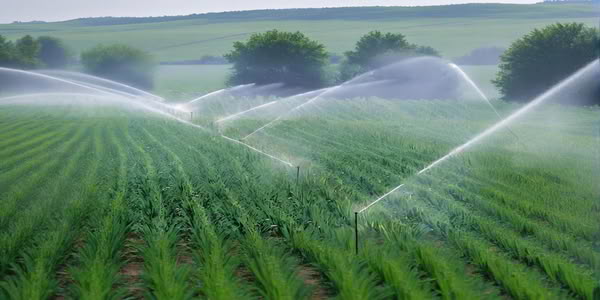
3. Agricultural Irrigation Field
In agricultural production, in garden irrigation and farmland water conservancy water delivery and irrigation projects, UPVC Pipes for Water Supplys can stably transport water sources to the fields, achieve precise irrigation, improve the utilization efficiency of water resources, and promote the development of agricultural production.
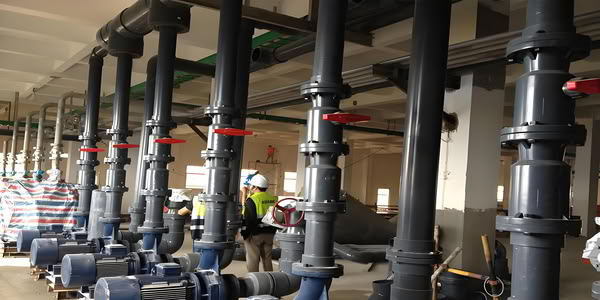
4. Water Treatment Industry
In the water treatment pipeline system of water treatment plants, UPVC Pipes for Water Supplys can adapt to various complex water treatment processes to ensure the smooth progress of the water treatment process.