
PPR Pipe


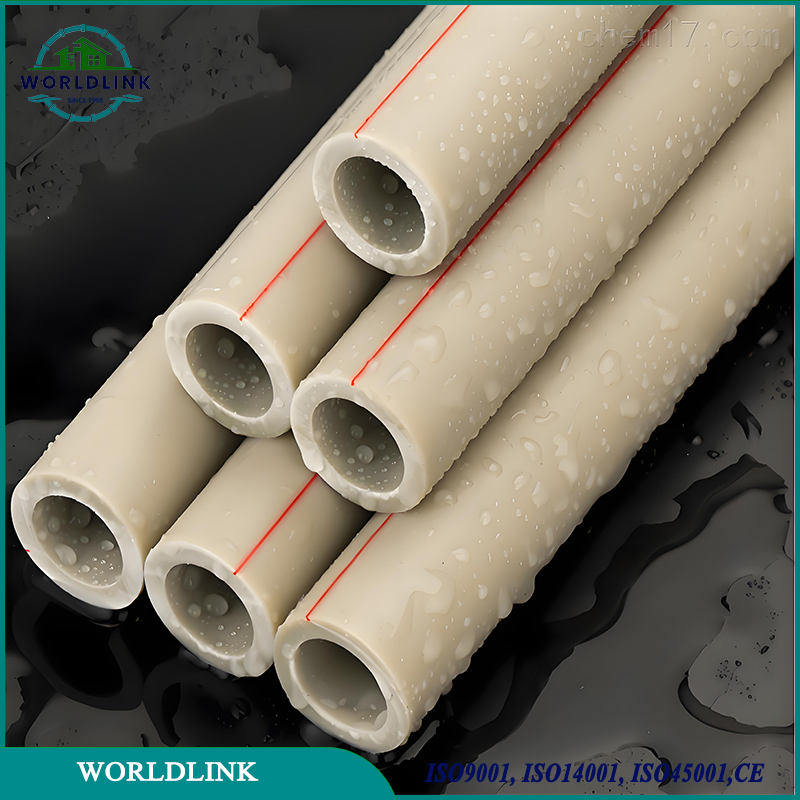

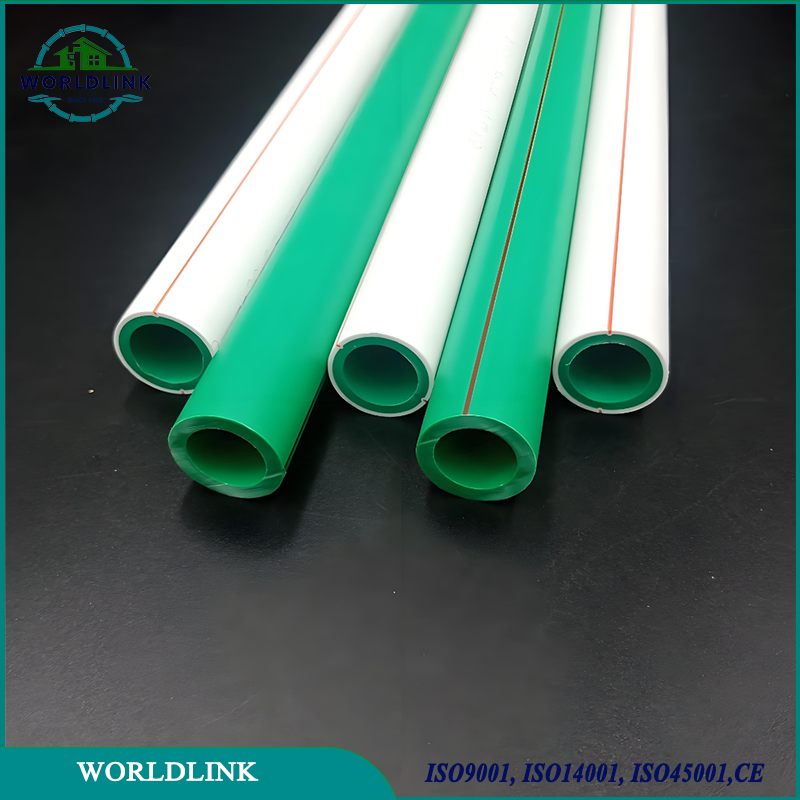
PPR Pipe for Hot Water
The PPR hot water pipe is a kind of pipeline specially used for transporting hot water. It is made of random copolymer polypropylene (PP - R) material and is widely used in building water supply and drainage systems and hot water supply systems.
- Diameter: DN20-DN160
- Pressure Ratings: PN20, PN25
- Color: White, green, grey, orange. Colors can be customized.
- Packaging: Bundled
- Certificate of Origin: China
- Product Inspection: Inspection of raw materials, production process, delivery, or cooperation with a third-party quality inspection
- Minimum Order Quantity: Mixed specifications, 1 20-foot small container
Detailed Description of PPR Pipe for Hot Water:
The PPR hot water pipe is a high-performance pipe carefully designed to meet the needs of hot water transportation. It is mainly made of high-quality random copolymer polypropylene and processed through advanced technology. It has excellent heat resistance, with a Vicat softening point as high as 131.5°C. It can work stably in a hot water environment of 95°C for a long time, and can even withstand a temperature of up to 110°C instantaneously, fully meeting various hot water supply scenarios in households and commercial places. The cut ends of the pipe are neat and perpendicular to the axis of the pipe body to ensure the sealing and accuracy during connection.


Material Characteristics and Advantages of PPR Pipe for Hot Waters
High Strength and Pressure Resistance: With a uniform and dense molecular structure, it has excellent mechanical properties. The tensile strength at room temperature is ≥25MPa, and it can still maintain good pressure resistance in a high-temperature environment. It is suitable for scenarios with high pressure requirements such as high-rise buildings and underfloor heating systems.
Hygienic, Safe and Non-toxic: The raw materials are pure, free of heavy metals such as lead and cadmium, as well as toxic additives. No harmful substances will be released at high temperatures. It has passed the national drinking water hygiene standard certification and can be directly used for the transportation of hot drinking water to ensure the safety of water quality.
Strong Chemical Corrosion Resistance: It is inert to acids, alkalis, salts and most chemical media. Even if it transports hot water containing trace amounts of chemical agents for a long time, it is not easy to be corroded, reducing the risk of pipeline perforation and leakage and prolonging the service life.
Low Thermal Conductivity, Thermal Insulation and Energy Saving: The thermal conductivity is only 0.21W/(m・K), which is about 1/200 of that of steel pipes. The heat loss is low when transporting hot water. It can reduce the thickness of the pipeline insulation layer or eliminate the need for insulation measures, reducing energy consumption and installation costs.
Smooth Inner Wall, Scaling Resistance: The inner wall of the pipeline has a high flatness (surface roughness Ra≤0.2μm), with low water flow resistance. It is not easy to adsorb calcium and magnesium ions, and it is not easy to scale after long-term use, maintaining a stable water flow rate and transportation efficiency.
Flexibility and Impact Resistance: The material has good toughness and can withstand a certain degree of bending and vibration. It is not easy to break during installation. In an environment with large temperature differences, it can effectively relieve the stress caused by thermal expansion and contraction, reducing the risk of pipeline cracking.
Firm Hot Melt Connection: The pipeline and fittings are integrally connected through hot melt welding. The strength of the joint is higher than that of the pipeline itself, and it has excellent sealing performance, avoiding the leakage of high-temperature hot water. The installation is convenient and highly reliable.
Excellent Aging Resistance: By adding antioxidants and light stabilizers, its performance is stable in environments such as ultraviolet rays, high humidity and heat. No additional protection is required when used outdoors. The service life can reach more than 50 years (under the conditions of room temperature 20°C and pressure 0.6MPa).
Light Weight, Convenient Installation: The density is only 0.9g/cm³, which is about 1/9 of that of steel pipes. The handling and construction are less difficult. It can be efficiently installed in narrow spaces or during high-altitude operations, reducing labor costs and labor intensity.


Inspection of PPR Pipe for Hot Water::

|

|

|
|
Appearance Quality Inspection |
Dimension Deviation Inspection |
Pressure Resistance Performance Inspection |

|

|

|
|
Temperature Resistance Inspection |
Chemical Corrosion Resistance Inspection |
Hygienic Performance Inspection |
| Specifications of PPR Pipes | |||||
| DN(mm) | S5 / PN12.5 | S4/PN16 | S3.2 / PN20 | S2.5 /PN25 | S2 / PN32 |
| 12 | 1.8 | 1.8 | 2 | 2.4 | |
| 16 | 2 | 2.3 | 2.7 | 3.2 | |
| 20 | 1.9 | 2.3 | 2.8 | 3.4 | 4.1 |
| 25 | 2.3 | 2.8 | 3.5 | 4.2 | 5.1 |
| 32 | 2.9 | 3.6 | 4.4 | 5.4 | 6.5 |
| 40 | 3.7 | 4.5 | 5.5 | 6.7 | 8.1 |
| 50 | 4.6 | 5.6 | 6.9 | 8.3 | 10.1 |
| 63 | 5.8 | 7.1 | 8.7 | 10.5 | 12.7 |
| 75 | 6.8 | 8.4 | 10.3 | 12.5 | 15.1 |
| 90 | 8.2 | 10.1 | 12.3 | 15 | 18.1 |
| 110 | 10 | 12.3 | 15.1 | 18.3 | 22.1 |
| 125 | 11.4 | 13.9 | 17.1 | 20.8 | 25.1 |
| 140 | 12.7 | 15.6 | 19.2 | 23.3 | 28.1 |
| 160 | 6.29 | 17.3 | 21.9 | 26.6 | 32.1 |
PPR hot water pipes are mainly applied to the following scenarios:
Domestic Hot Water Supply System: PPR hot water pipes play a crucial role in home scenarios. PPR hot water pipes are widely used in the connecting pipes of various water consumption points.
Hot Water Circulation System in Hotels and Homestays: In commercial accommodation places such as hotels and homestays, PPR hot water pipes are used to construct a complete hot water circulation system, which can effectively reduce heat loss during the transportation of hot water and lower the operating costs.
Hot Water Facilities in Schools and Hospitals: The hot water supply in areas such as student dormitories and canteens in schools, as well as wards, operating rooms, and supply rooms in hospitals, is inseparable from PPR hot water pipes.
Underfloor Heating System: PPR hot water pipes have significant advantages in underfloor heating applications. Their good flexibility allows the pipes to be coiled flexibly according to the room layout, making the construction convenient, and they can be evenly laid under the floor.


