HDPE Pipe


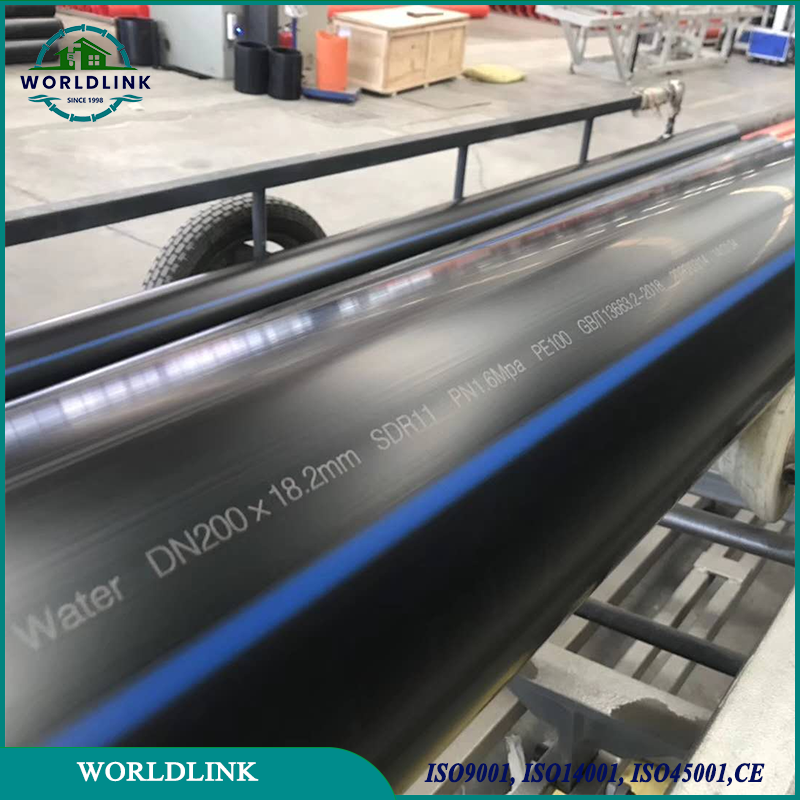
HDPE Pipes and Fittings For Marine
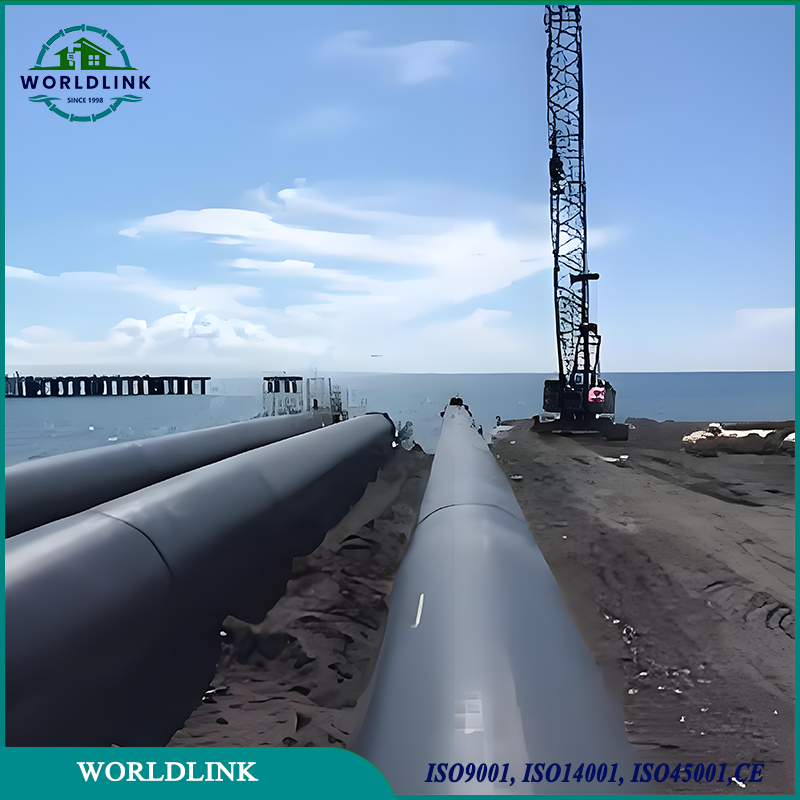
HDPE marine pipes are high-density polyethylene pipes designed for use in and around water bodies, including oceans, rivers, lakes, and coastal environments. They're widely used in marine engineering, harbors, desalination plants, dredging projects, and fish farms.
- 1. Material:PE80、PE100、PE100-RC、PE4710、PE3408
- 2. Size: DN20-DN2500mm
- 3. Length: 5.9 meters, 11.9 meters, can be customized according to customer needs
- 4.Pressure level: SDR33-PN5, SDR26-PN6, SDR21-PN8, SDR17-PN10, SDR13.6-PN12.5, SDR11-PN16, SDR9-PN20, SDR7.4-PN25
- 5. Color: black, blue, etc., color can be customized
- 6.Implementation standards: GB/T 13663、GB/T 15558、ISO 4437、ISO 4427、ASTM F714、ASTM D4976
- 7. Packaging: naked
- 8. Delivery time: 5-10 days, depending on quantity
- 9. Samples: Samples can be provided free of charge
HDPE Pipes and Fittings For Marine details description:
HDPE Marine Pipe is a pipe
designed specifically for the Marine environment and manufactured from High Density Polyethylene (HDPE) material.
Designed to cope with the harsh environmental conditions of the ocean, including seawater corrosion, salt spray, low
temperature, strong pressure, etc. The pipeline is widely used in offshore oil and gas transportation, Marine water
conservancy engineering, submarine drainage system and seawater desalination.
The main features of HDPE Marine
pipe include corrosion resistance, UV resistance, wear resistance, high pressure resistance, toughness, etc., it can
withstand high strength seawater pressure, and has high impact resistance and long-term stability. Therefore, HDPE
Marine pipes, as a substitute for traditional metal pipes, have been widely used in Marine engineering.
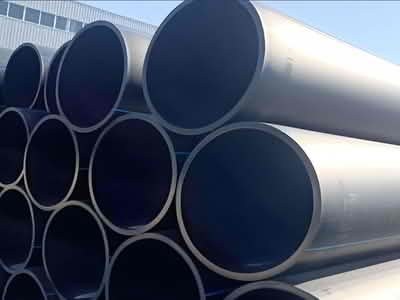


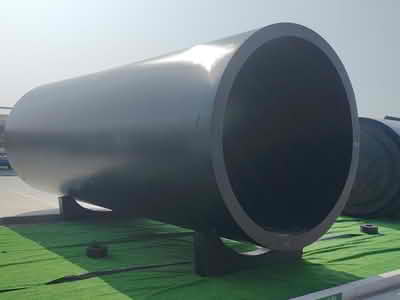
The material characteristics and advantages of HDPE Pipes and Fittings For Marine:
Corrosion resistance: HDPE
has excellent chemical stability, can resist the erosion of various chemical substances in the Marine environment
such as seawater, salt spray, acid and alkali, is not easy to rust and corrosion, and can ensure long-term stable
use.
Wear resistance: with high hardness and wear resistance, it can withstand the erosion and wear of the
current and sediment in the ocean, and it is not easy to wear and perforate, which is suitable for the occasions
that are vulnerable to wear such as the submarine pipeline.
Good flexibility: excellent flexibility, compared
with the traditional metal pipeline, it can better adapt to the terrain changes in the Marine environment, wave
impact and geological movement, reduce the risk of leakage caused by pipeline deformation or fracture, for example,
when laying on the unrolling terrain of the sea floor, it can bend with the terrain without too much pipe
connection.
Light weight: low density, light weight, easy to transport and install. In the Marine environment,
its buoyancy is good, and it can be maintained in a suitable position in the water by proper counterweight control,
which is convenient for pipeline laying and maintenance.
Strong impact resistance: able to withstand a certain
degree of external impact, such as ship anchoring, Marine life impact, etc., not easy to damage due to accidental
external force, to ensure the integrity of the pipeline.
Good insulation performance: With good insulation
performance, it can be used to protect submarine cables and other facilities that need insulation protection to
prevent current leakage and interference.
Long service life: Under normal conditions of use, the service life of
HDPE Pipes and Fittings For Marines can reach more than 50 years, reducing the frequency of pipeline replacement and maintenance, and
reducing long-term costs.
HDPE Pipes and Fittings For Marine connection:
Hot melt connection: The hot
melt machine is used to heat the connection part of the pipe and pipe fittings to a molten state, and then the two
are quickly bonded, cooled and solidified under a certain pressure to form a solid connection. Suitable for the same
material, nominal outer diameter ≥63mm pipe and pipe, pipe and pipe fittings connection.
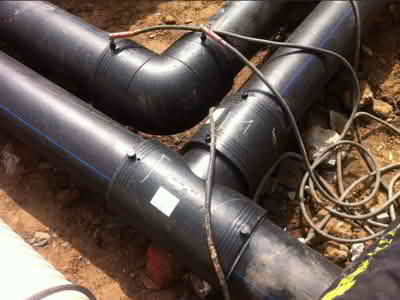
Electric fusion connection: the electric fusion pipe is set on the pipe, and the resistance wire in the electric fusion pipe is
electrified through the electric fusion welding machine, so that the resistance wire heats up and the contact
surface of the pipe and the pipe is melted, and the body is formed after cooling. Suitable for various
specifications of HDPE water pipe connection, especially suitable for nominal outer diameter < 63mm pipe or cannot use hot melt connection occasions.
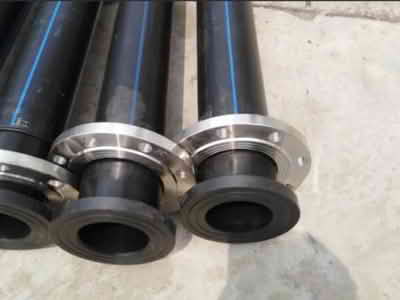
Flange connection: The HDPE pipe and flange are connected together by hot
melt or electric melt, and then the two flanges are connected by bolts, and the sealing gasket is installed in the
middle to realize the connection and sealing of the pipeline. The flange connection is suitable for the connection
of HDPE pipes with valves, flowmeters and other equipment, as well as the parts that need to be disassembled
frequently, which is easy to maintain and overhaul.

| Wall thickness minimum and maximum values are obtained from EN 12201-2:2011+A1:2013 | |||||||||
| Maximum and minimum wall thicknesses | |||||||||
| HDPE pipe series | |||||||||
| PE100 | SD21 | SDR26 | SDR33 | ||||||
| Norminal Diameter DN (mm) | Norminal Pressure, PN in bar | ||||||||
| PN8 | PN6 | PN5 | |||||||
| Wall Thickness (mm)& Weight | |||||||||
| emin | emax | Weight (kg/m) | emin | emax | Weight (kg/m) | emin | emax | Weight (kg/m) | |
| 355 | 16.9 | 18.7 | 18.63 | 13.6 | 15.4 | 14.83 | 10.9 | 12.1 | 12.00 |
| 400 | 19.1 | 21.2 | 23.69 | 15.3 | 17 | 18.80 | 12.3 | 13.7 | 15.27 |
| 450 | 21.5 | 23.8 | 29.88 | 17.2 | 19.1 | 24.27 | 13.8 | 15.3 | 19.22 |
| 500 | 23.9 | 26.4 | 36.79 | 19.1 | 21.2 | 29.93 | 15.3 | 17 | 23.70 |
| 560 | 26.7 | 29.5 | 42.48 | 21.4 | 23.7 | 34.38 | 17.2 | 19.1 | 27.85 |
| 630 | 30 | 33.1 | 58.47 | 24.1 | 26.7 | 47.57 | 19.3 | 21.4 | 38.49 |
| 710 | 33.9 | 37.4 | 68.37 | 27.2 | 30.1 | 55.40 | 21.8 | 24.1 | 44.75 |
| 800 | 38.1 | 42.1 | 94.32 | 30.6 | 33.8 | 76.54 | 24.5 | 27.1 | 61.87 |
| 900 | 42.9 | 47.3 | 109.68 | 34.3 | 38.3 | 88.58 | 27.6 | 30.5 | 71.83 |
| 1000 | 47.7 | 52.6 | 147.44 | 38.2 | 42.2 | 119.73 | 30.6 | 33.5 | 96.49 |
| 1200 | 57.2 | 63.1 | 212.02 | 45.9 | 50.6 | 172.04 | 36.7 | 47.3 | 138.77 |
| 1400 | 66.7 | 73.5 | 265.28 | 53.5 | 59 | 214.89 | 42.9 | 47.3 | 173.67 |
| 1600 | 76.2 | 84 | 346.37 | 62.1 | 67.5 | 284.89 | 49 | 54 | 226.71 |
| 1800 | 85.7 | 94.5 | 438.25 | 69.1 | 75.8 | 356.78 | 54.5 | 60.8 | 283.77 |
| 2000 | 95.2 | 105 | 540.93 | 76.9 | 84.2 | 441.15 | 60.6 | 67.5 | 350.58 |
HDPE Pipes and Fittings For Marine application scenario description:
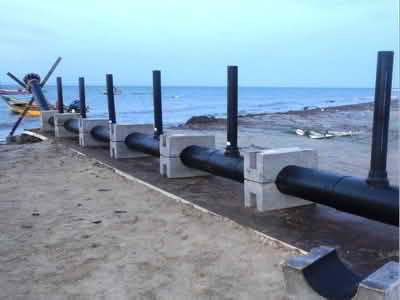
Seawater transportation: seawater intake and transportation pipelines can be used in seawater desalination plants, as well as seawater
transportation pipelines used by coastal industrial enterprises for cooling, flushing and other
purposes.
Submarine pipelines: including submarine oil and natural gas transmission pipelines, as well as
submarine power cables, communication cables protection casing, etc.
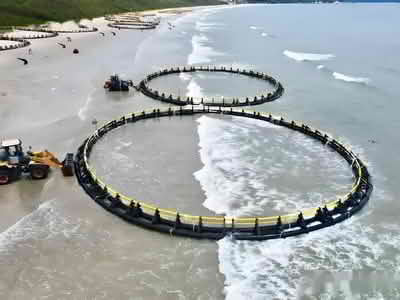
Marine aquaculture: For example, water
supply and drainage pipes for aquaculture cages, pipe systems for oyster aquaculture, etc., to provide stable water
flow and water quality environment for aquaculture.
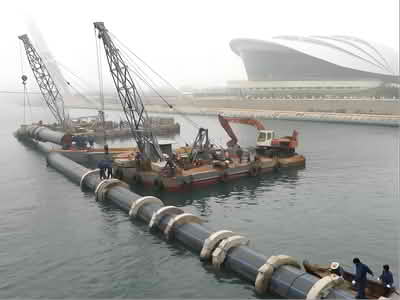
Marine engineering infrastructure: such as water supply and
drainage pipes of ports and wharfs, drainage systems of breakwaters, etc., can withstand seawater corrosion to
ensure the normal operation of engineering facilities.
Offshore wind power: Used for cable protection, cooling
water pipelines in offshore wind power projects, etc., to adapt to the complex Marine environment and long-term
operation requirements of offshore wind power.
HDPE Pipes and Fittings For Marine application picture description:
1. HDPE Pipes and Fittings For Marine is used
in seawater transportation
2. HDPE Pipes and Fittings For Marine is used in Marine aquaculture
3. HDPE Pipes and Fittings For Marine is used in
Marine engineering infrastructure
4. HDPE Pipes and Fittings For Marine is used in sea wind power